Showing posts with label Ordinary Time. Show all posts

Monday, October 24, 2011

30th Sunday of Ordinary Time: What God has joined no human being must separate


The Pharisee’s were always trying to trip up Jesus. In the Gospel today, they ask him, “which is the greatest commandment?” Of course at the time of Jesus, there were more than 600 prescriptions of the law including the 10 Commandments. Jesus answered the Pharisees by splicing together two passages from the Torah, the first from Deuteronomy 6:5, “You shall love the Lord you God with your whole heart, with your whole soul, and with all your mind” and the second from Leviticus 19:18 “You shall love your neighbor as yourself.”
I’m reminded of another time the Pharisees tried to trick him and Jesus did something similar. Once they asked him if it was lawful for a husband to divorce his wife. Jesus answered by quoting from the book of Genesis: from the beginning of creation, ‘God made them male and female.’ But then he added something curious. Jesus said, “What God has joined men must not divide.” Every time I officiate at a wedding, after the couple exchanges vows, I say these very words, “What God has joined men must not divide.”
These words have an immediate context within the debate concerning divorce, but I think they have a deeper, more spiritual meaning. Jesus answered the question about the greatest commandment by joining together two commandments: love God and love your neighbor. What God has joined we must not divide. In other words, you cannot love God if you don’t love your neighbor. St. John says in one of his letters, “the man who says he loves God but despises his neighbor is a liar and does not have the love of God in him.” Likewise, you cannot love your neighbor if you don’t love God.
The problem with the Pharisees was they had separated what God had joined. They tried to love God without loving their neighbor. And because of that, their claim to love God was suspect. By not loving their neighbor, the Pharisees demonstrated that really their observance of the law was not an act of true worship but rather of self-promotion. Instead of leading them to love of neighbor, their observance of the law led them to scorn others who failed to live up to their standards. Because they separated what God had joined, they failed in both.
Now today, there are some people who, like the Pharisees, suffer from self-righteousness and do not love their neighbor as Christ has instructed. But by and large, I don’t think this is the greatest fault. People are generally quite charitable. I see young people involved in many service projects. The Dempsey Challenge raised over 1 million dollars this year. And whether you agree with them or not, the fact that many people are involved in the Occupy Wall Street protest is a sign that people are concerned for justice and equality. It seems to me the problem today isn’t so much love of neighbor as it is love of God. If you separate what God has joined, you fail in both. Even with the best intentions.
Saturday October 22nd is the memorial feast of Blessed Pope John Paul II. I was privileged to attend the 2002 World Youth Day in Toronto Canada. The Pope made a comment that I have always remembered. To the youth of the world, He said:

“Dear friends, Christ alone is the cornerstone on which it is possible solidly to build one’s existence. … The twentieth century often tried to do without that cornerstone, and attempted to build the city of man without reference to Him. It ended by actually building that city against man! Christians know that it is not possible to reject or ignore God without demeaning man.
The aspiration that humanity nurtures, amid countless injustices and sufferings, is the hope of a new civilization marked by freedom and peace. But for such an undertaking, a new generation of builders is needed. Moved not by fear or violence but by the urgency of genuine love, they must learn to build, brick by brick, the city of God within the city of man.
Allow me, dear young people, to consign this hope of mine to you: you must be those "builders"! You are the men and women of tomorrow. The future is in your hearts and in your hands. God is entrusting to you the task, at once difficult and uplifting, of working with him in the building of the civilization of love.”

My brothers and sisters, Pope John Paul II reminded us that the “spirit of the world” offers many false illusions and parodies of happiness and that the greatest deception, and the deepest source of unhappiness, is the illusion of finding life by excluding God, of finding freedom by excluding moral truths and personal responsibilities. Let us not separate what God has joined. Let us neither exclude God or our neighbor from our lives. Let us seek the justice and good we long for by loving the Lord our God with our whole heart, soul and mind and let us love our neighbor as ourselves. Blessed John Paul II, pray for us.

Monday, October 17, 2011

29th Sunday of Ordinary Time: Give to God what Belongs to God


( Listen to the recorded version. )

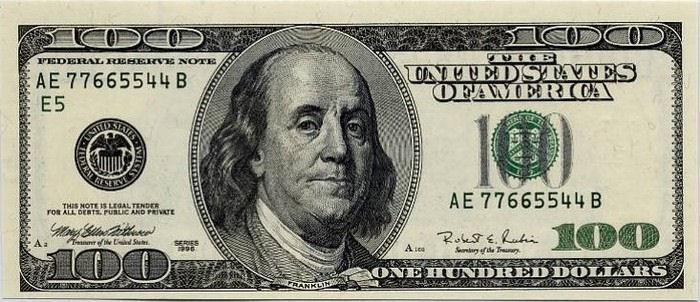
 What gives money its value? A $100 bill isn’t printed on a hundred dollars worth of paper. If I went to Home Depot and bought a washer the size of quarter it might cost me more than 25c. So what gives currency it’s value? In the Gospel, Jesus asks “Who’s image is on it?” The value comes from the one who mints it. The value comes from the one who backs it, who guarantees its value. A $100 bill is worth $100 because the State back it, secures it, and guarantees it- not because it is printed on $100 worth of paper.
In the Gospel today, Jesus is approached by the Pharisees and Herodians, the equivalents of the Democratic and Republican parties; Jesus is neither party. Both parties seek to trap him. But Jesus deftly maneuvers the political question of his day: “Is it lawful to pay the census tax to Caesar?” Jesus’ answer, “Give to Caesar what belongs to Caesar; give to God what belongs to God.” He teaches two things. First, that as Christians we must not avoid civic responsibility. We must be involved in society. Second, more importantly, and this is the major point of the Gospel which is often lost, we need to give to God what belongs to God. We can’t avoid our religious obligations either.
So what does this mean for us today? We must give to Caesar what belongs to Caesar; and to God what belongs to God. I don’t know if you’ve been following a lot of the political goings on recently, if you have been aware of the arguments being heard by the supreme court, or the recent mandate issued by the Department of Health and Human Services with its extremely narrow religious exemption clause, but let me frame the challenge this way: Give to Caesar what belongs to Caesar and to God what belongs to God, means don’t give Caesar what doesn’t belong to him. Don’t give to Caesar what belongs to God.
In the book of Genesis, it says God created man and woman in his own image and likeness. At the very beginning, mankind was created, minted, stamped with the very image and likeness of God. Like a quarter or $100, God’s image is stamped on us. And it is God who guarantee’s our value. He says “you are my beloved” and in Jesus, God shows us that he would rather die than risk loosing us for eternity. We are worth a lot to God. It is He who sets our value. God is the foundation of our human rights.
Human rights by nature are universal and eternal. They must be, because they come from God. And we expect them to be. We expect rights to be for everybody, and we expect them not to change or be capable of change, else they are not rights. Rights come from God. They come from our common human nature, created in the image of God. Rights are not the property of the State. The State does not have the “right” to issue rights. Only God can do that. The State’s responsibility is to recognize people’s God given dignity and to protect and promote human rights.
The problem is, if you take God out of the equation, human rights lose their foundation, they lose their guarantee. That’s why in the 20th century we’ve seen some of the greatest abuses occur in secular and atheistic societies. If there is “no God” or people pretend that God doesn’t exist, than its easy for the State to overstep it’s bounds . In Nazi Germany, the State defined an entire class of people “non-human”. It denied the dignity of the Jewish people, failed to recognize the image of God impressed on their souls, and instead stamped their own image on them, tattooed their arms and marched them off to death camps.
The question of give to Caesar what belongs to Caesar and to God what belongs to God is the central issue today. It is what lies behind all the other issues: like health care rights, abortion, euthanasia, and same-sex marriage. For instance, the problem with same-sex marriage isn’t really homosexuality. Our opposition to same-sex marriage has very little to do with homosexuality. It has more to do with marriage and the role of the State. Whereas the Church believes the State has a responsibility to recognize and defend the dignity of all homosexual persons, we do not believe the State has the right to redefine marriage. The right to marriage comes from our human nature, from our being created in the image and likeness of God. Marriage does not belong to the State. And we should not give to Caesar what doesn’t belong to Caesar. Otherwise it is very difficult to get it back. It may seem good now, and some people may benefit from the State’s interference in the short-term, but what’s to stop the State at in the future from asserting the authority we’ve ceded to it to deny people the right to marry because of their race or the color of their skin? What’s to stop the State from dissolving your marriage? Or telling you who you must marry.
Ok. I’m not a politician. I am your pastor. I will not tell you how to vote. But I will tell you what the Gospel says. The Gospel says that you cannot avoid being part of society. That you have a moral obligation to be involved. You must inform your conscience. You must know your faith. And you must participate in our civic society. Not too long ago your parents and grandparents were denied a voice in American society simply because they were Catholic. They worked hard and made many sacrifices to change that. We should not be politically apathetic.
Second, you must give to God what belongs to God. The only reason we are debating things like same-sex marriage and abortion today is because long ago Christians stopped giving to God what belongs to God. And that’s the challenge. The burden is not on others. The burden of responsibility is on us. We have to give to God what belongs to God: Life belongs to God. Marriage belongs to God. The problem is that too many Christians have give life and marriage to other things and embraced a culture of contraception and divorce.
You have a moral obligation to participate in society. For some of you that will mean becoming lawyers and lawmakers. But for most of us, it will mean getting very serious about giving God our life and our marriage. The only way we will be able to defend the right to life and the institution of marriage is if we are living our Catholic faith at work, at home, in the marketplace, in the public square. If you want to make a difference in this world, give God your life, give God your marriage. Give to God what belongs to God.

Saturday, September 3, 2011

Pick up your cross and follow me...

Homily for the 22nd Sunday of Ordinary Time


I was in Wal-mart the other day and I saw a bunch of families buying back to school supplies. I can't believe it's already back to school! Watching the kids pick out notebooks and lunchboxes I thought about choices, the choices we make, the way that life is full of choices: like the choice of a lunchbox, when I was kid, the choice was clear- Star Wars lunch box. Or the choice of notebooks. Or the choice of whether or not to grow a beard.
Life is full of choices. What choices are your confronted with today? Are they choices associated with going back to school? The choices of who your friends are? The choices of what to wear? The choices of where to sit on the bus or in the cafeteria? Maybe you finished school a while ago, maybe you have different choices to make. Maybe they are big important life choices? Choices about work, career, family. Whatever they are, we all have choices to make, life is full of choices. But the most important choice you will ever make is to choose Jesus Christ, and to pick up your cross and follow Him. But what does it mean to choose Jesus and pick up your cross and follow him?
Does God want us to suffer? I don't think so. Suffering was never his plan for us. It is the result of sin. We suffer because we live in a world that is opposed to God’s love, opposed to goodness and life, opposed to the Truth. It wasn’t because God is mean, but because of sin, that Jesus told his disciples he must suffer. Because he was choosing the Truth, Jesus knew he would be attacked, persecuted, afflicted and murdered. The darkness hates the light.  Jesus accepted the Cross. He accepted it at the consequence of his choice to do the will of God.
To follow Jesus and take up the Cross means to do the same: to put God first, to live for him alone, to not let anything or anyone come between us, to not be conformed to this age but to be transformed. Each day we are given an opportunity to become more and more the person God is calling us to be. And when Jesus says to us that we must daily follow him and take up our Cross he doesn’t mean that we need to go looking for ways to suffer or ways to make our lives more difficult. What he means is that daily we have the choice to be faithful; daily we have the choice to live in the Truth, and to offer our lives as a living sacrifice of praise and worship.
The Cross is the result of doing the will of God in a sinful world. It is the consequence of the choice you make to live the kind of life that God wants you to live, in the Truth, in Love, unreservedly, unconditionally, regardless of the consequences. To accept the Cross means to do what is right, even when it isn’t easy; it is the choice to do what you know in your heart you must, even if it is unpopular, or if it means that others will reject you or even hurt you.
My brothers and sisters, life is full of choices. And the most important choice we will ever make is to choose Jesus Christ and pick up our crosses and follow him. This is not a one-time choice, something we do once, it is the daily choices we make to do what is right, to live in the Truth, to be faithful, regardless of the consequences. Life is full of choices. Will you choose Christ?

Sunday, August 7, 2011

19th Sunday of Ordinary Time

Readings: 1st Kings 19:9, 11-13; Romans 9:1-5; Matthew 14:22-33

Listen to the homily.


I don't know if you have ever been in a really scary situation and how you dealt with it. Me, I'm afraid of heights. I remember one summer my family went to the water park. At the top of the waterslide I looked down and became paralyzed. After several agonizing minutes, and annoying the people behind me in line, I finally climbed down. I couldn't do it. I don't know if you are scared of heights; if you've ever had to climb down a waterslide? Even if you haven't, we all have to deal with scary situations from time to time. We all have to cope with our fears.

It seems to me many people would rather live with the burdens and dangers they know, than risk stepping out into an unknown situation where things could get worse- or better. I see it all the time: the couple who suffers a lackluster marriage rather than working on their marriage and risk "rocking the boat"; or the person who works for many years in a job that affects their physical, psychological or emotional health rather than takes the risk of putting together a resume, looking for a new job, moving or starting their own business; I see it in the teenagers who will suffer abuse and mistreatment from so-called friends, or give up on chastity, because they are afraid to risk being alone or disliked.

We all have to deal with scary situations from time to time. We all have to learn to cope with our fears. The question is: how are we as Christians to deal with them? In the Gospel today, during a terrible storm at sea, the Lord came to his disciples walking on the water. He told them, "Take courage and be not afraid!" So, how are we to deal with our fears? Jesus says courage.

Now courage is not the opposite of cowardice. The opposite of cowardice is recklessness. In the Gospel we have an example of both. The disciples in the boat were fearful to the point of inaction. They were paralyzed. If they could have turned around and climbed down the proverbial waterslide, they would have. Then there is Peter. Peter's action was the extreme opposite. He recklessly jumped out of the boat. But that doesn't make him courageous. I made him reckless. He had no fear. As soon as he became aware of his situation, he panicked and began to drown. Neither the disciples cowering in the boat, nor Peter recklessly jumping out of the boat are good examples for us of how to deal with our fears.

If courage isn't recklessness, then what is it? What does it look like? Aristotle defines courage as a virtue. It is an act of understanding our fears and the ability to overcome those fears. As Catholics we speak of "fortitude" -one of the 4 cardinal virtues. The catechism says "Fortitude assures firmness in difficulties and constancy in the pursuit of the good." Basically, courage is the power by which we overcome our fears. So isn't a feeling or an emotion. Courage isn't fearlessness. In fact, fear is sort of a prerequisite, because it is the overcoming of fear for the sake of the good that makes an action courageous.

In the Gospel, after initially being reckless, Peter found himself drowning. Aware of his danger, he was finally afraid, and in that fear, he demonstrated real courage. He turned to the Lord and exclaimed, "Lord, save me!" That's courage. It is courage rooted in knowledge and humility. That's what courage looks like. That's what it means to "Take courage and be not afraid!"

My brothers and sisters, being a Christian doesn't mean “no fear.” We all have our waterslides moments. We have them so we might tap into the source of courage and become stronger. When the storms of life come, the challenge is to "Take courage and be not afraid." We need not cower, nor be paralyzed. Neither should we be reckless and jump right in. When the moment comes, we should reach out to Jesus, just as Peter did, and say "Lord, save me!"

In the arms of Christ, Peter overcame his fear. In the Eucharist, Jesus is as present to us today as He was to Peter on the sea. And just as Jesus stretched out his arms to Peter- just as He stretched out his arms on the Cross- in the Eucharist, Jesus continues to stretch out his arms to us today. The Eucharist is the key to fortitude. It is the source of Christian courage. When we receive Holy Communion, when we kneel before the Tabernacle or fix our gaze on the Blessed Sacrament in adoration, we have the opportunity, like Peter, to be courageous. We have all we need to face our fears. "Take courage, be not afraid!"

Monday, August 1, 2011

18th Sunday of Ordinary Time

Is 55:1-3; Rom 8:35, 37-39; Mt 14:13-21


When I was a kid I spent the summer at Boy Scout Camp. One of the most anticipated events of the week was the meal when we got Tater-Tots. If you have never had Tater-Tots, they are like little barreled hash-browns; they’re like bite-sized, greasy, fried, potatoey goodness. At camp, meals were served family style. We had like 10-12 boys per table. The waiter would bring a bowl of Tater-Tots and we'd have to share. In theory it works. I’m sure it looks good on paper. But 12-15 year old boys aren’t good at sharing. As the bowl went around the table everyone would take a big heaping portion because we never knew if we’d have enough or if there’d be seconds. By the time the last person at the table got the bowl there were usually only 1 or 2 tater tots left.

I don't know if you have ever had Tater-Tots? If you’ve never had them, they’re pretty good. But even if you’ve never had tater-tot’s maybe you’ve had the experience of having to share something like a cake or a pie, and you’ve wondered if there’d be enough left for you? Maybe you’ve even been the last person who got like 1-2 tater-tots, or a little piece of frosting. Whatever it is, it’s a pretty common experience: this fear of sharing; the fear that there isn’t enough to go around, the fear that there won’t be enough for me. And often when we feel that way, we react by clinging, or hoarding or taking more than we need. The fear that we won’t have enough left over for ourselves can keep us from being generous with what we have.

In the Gospel today the Twelve Apostles had only five loaves of bread and two fish. It wasn’t enough even for themselves, let alone the crowd who had come to hear Jesus. But they trusted their inadequate supply of food to Jesus and they generously shared what they had with others. Because fear didn’t stop them from being generous, the Lord performed a miracle. No one went hungry. No one was left with 1-2 Tater-Tots. Everyone had enough.

Now some commentators will suggest that in the presence of Jesus there was a heightened sense of peace and brotherhood and so when the basket of food came around everyone took just a little bit, and they were content with just a little. But I went to Boy Scout camp. I know better. I don’t think it went down that way. I like to think everyone took a big heaping portion. And that the miracle was not that everyone learned to share, but that God took the generosity of man and multiplied it. God will never be outdone in generosity.

As Christians our mission in the world is to show forth the love of God. The only way some people will ever know the love and generosity of God is if they experience it through us. And so we shouldn’t be stingy with the gifts God has given us. God doesn’t cling or hoard. Christ shows us that God gives everything and holds nothing back. And as Christians we need to love like that! In fact, this is the new commandment Jesus gave us. He said, “Love one another as I have loved you.” And He said, “This is how the world will know you are my disciples: by your love for one another.”

The good news we heard in the Gospel today is that we don’t need to be afraid. We don’t have to fear giving 100% or going all in. We don’t have to be afraid that there won’t be enough left over for ourselves. Because God will not be outdone in generosity. Every time we come to the Eucharist, Christ obliterates this fear in us. What would the world look like if we were more truly an Eucharistic people? If we lived without fear. If we gave and shared our gifts. If we went “all in”? My brothers and sisters, what holds you back? What do you fear? Be not afraid: God will not be outdone in generosity.

Listen to the homily.

Tuesday, July 19, 2011

16th Sunday of Ordinary Time

 Wis 12:13, 16-19; Rom 8:26-27; Mt 13:24-43


    I don't know if you have ever done any gardening? Maybe you've planted some flowers around the house? Maybe you have a small patch of herbs? My mother has a bunch of flower beds and she's always outside doing something with them: watering them, pruning them, pulling out weeds. If you have ever worked in a garden you know that it isn't always easy to tell if something is a flower or a weed. Sometimes the only way you find out is when it flowers.
    In the Gospel today, Jesus says that the Kingdom of God is like a field growing weeds among the wheat. I don't know how you feel about that? It's one thing to say the Church is made up of saints and sinners. It's another to admit there are hypocrites, dissenters, people who do evil things and even some evil people in the institutional Church. It's an uncomfortable reality. Some can't handle it. Some use it as an excuse to leave the Church. Some even claim it discredits the existence of God. Jesus is telling us not to be dismayed. If God permits evil it is because he intends an even greater good. If anything, the presence of "weeds" in the Church is a sign of God's mercy.
    The presence of weeds is not an excuse to give up. It means we have to work harder. God is the sower but we are his field hands. We have to commit to the garden. It isn't our place to judge others. We can't even judge ourselves. It isn't always easy to tell the weeds from the flowers. We don't want to make the mistake of pulling up good plants. We have to trust that one day it will all be made clear and we will know weed from wheat by their fruits. Until that day, let us be merciful as God is merciful, and let us strive to be faithful and ourselves to bear much fruit.